
Education
Timeline
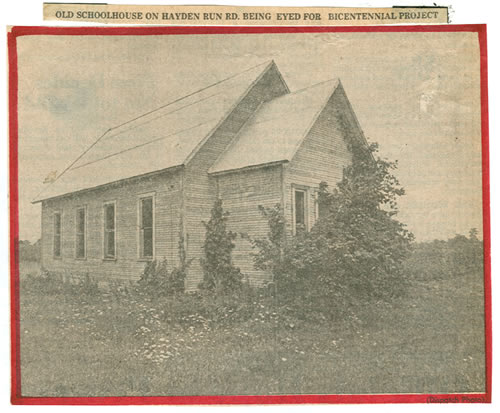
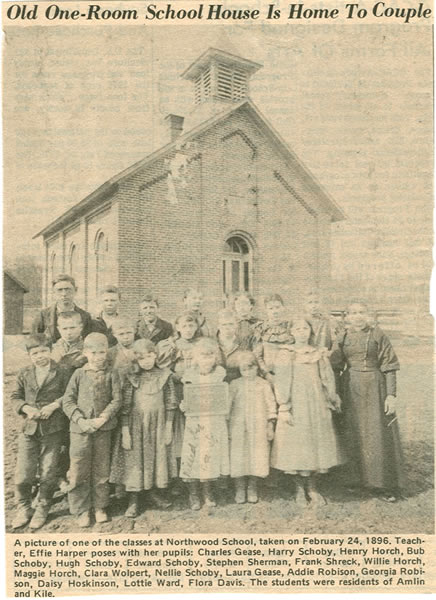
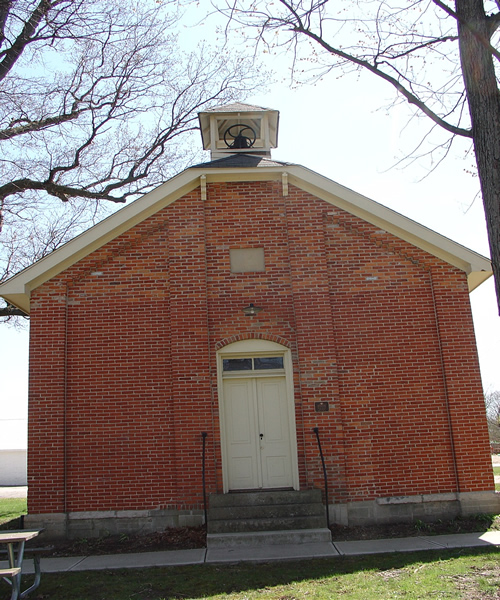
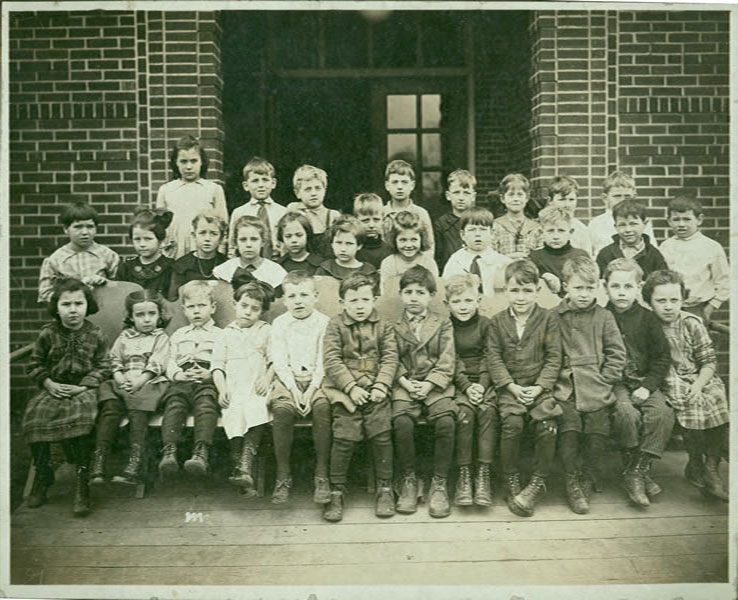
In the 1800s Northwest Franklin County was a rural area. Because the area was mostly a farming community and homes were far apart, the population was very small. As a result, the landscape was dotted with one-room schoolhouses.
The one-room school house helped many children to read and write. The teacher knew the students and the parents very well. She usually lived close to where she taught, and she was a highly respected member of the community. It was like she was her own principal.
The most important part of country schools was that they had a close relationship with the community. The school was not only a school, it was a community center for many programs and meetings. It may have been a church on Sunday, or a place to go vote on election day. No school in the American experience has ever been so close to the people.
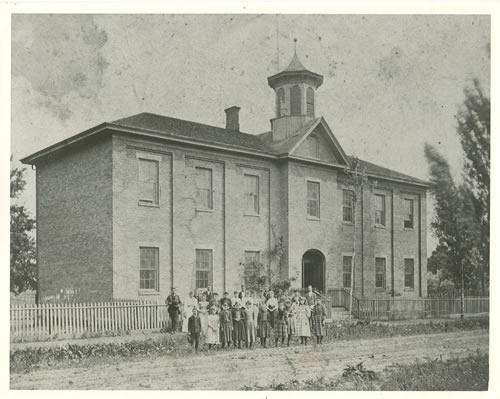
The first school in Norwich Township was opened in a log building at Smiley’s Corners, on the river road, in about 1814. By the late 1800s, several one-room schoolhouses were educating students in Northwest Franklin County. In 1878 the Consolidated School was built for $2500 for students to attend.
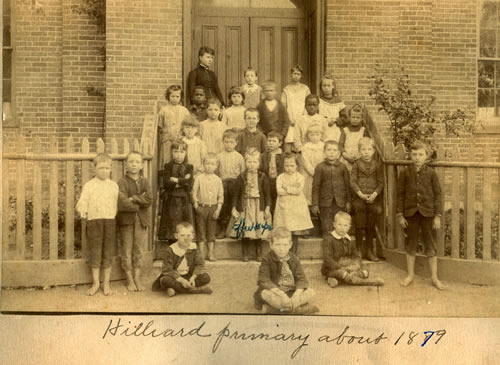
If you travel down Main Street in Old Hilliard, you will see the consolidated school building now called the Masonic Hall. It was called a consolidated school because it combined both black and white students in one building. Before this, they went to different schools.
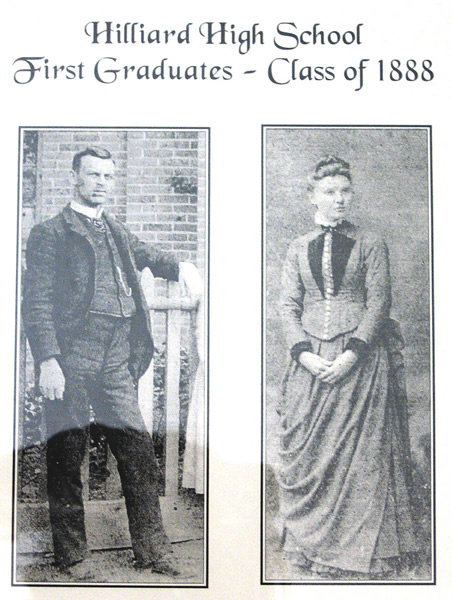
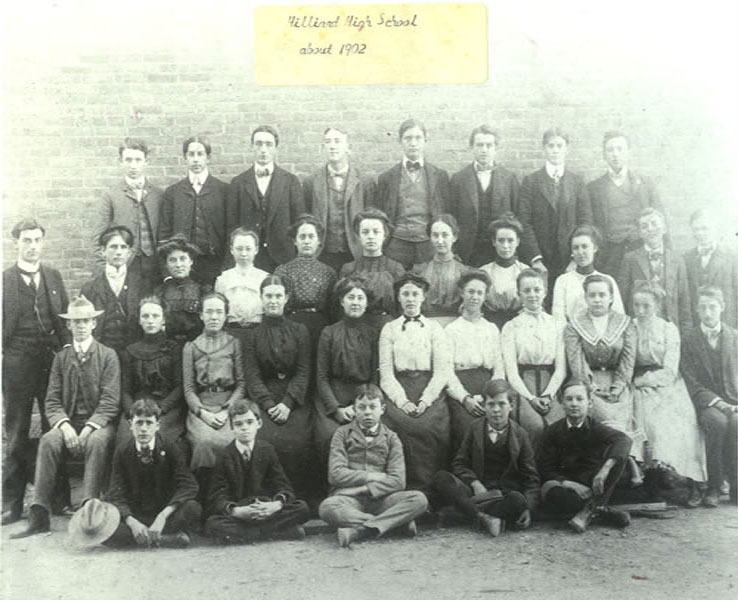
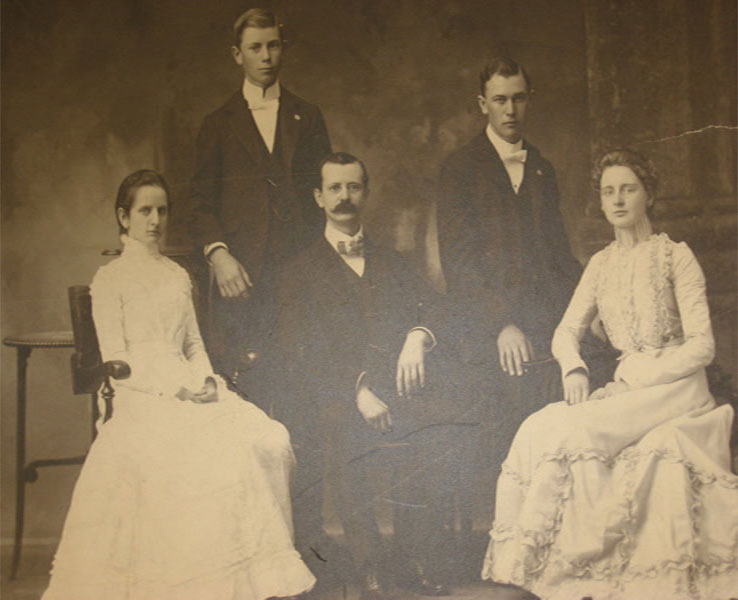
By 1887, the first high school was in the Consolidated School. In 1888, the first class to graduate consisted of two students, Emma Harrington and Frank Elzey.
The school system was still called the Norwich Township Rural District at this time. In the early 1900s children began to be transported to school. They were transported by horses or horse and buggy by their parents and neighbors. In 1912, the Board of Education felt that this wasn’t the best way to transport students to school because of the addition of cars. They were concerned about the safety of the students. The Board began to consider other types of wagons to transport students to school. By 1918, the Board of Education accepted bids to take children to and from the schools in Amlin and Hilliard by either horse-drawn vehicles or auto truck! The school board decided on using 14 foot wagons. Horses pulled these wagons.
During this time the Hilliard Schools and the Norwich Township Schools merged to become the Norwich Township Public Schools. The Hilliard High School was built for a cost of $11,000 in 1905-1906. It was located on the site where Scioto Darby Elementary School stands today. The first telephone was placed in the new high school, which was called Norwich Township School. The schools were heated by coal.
In 1912, Brown Township paid $4.00 a month for its students to attend the Norwich Township Schools high school. Two years later, the Brown Township School District and the Norwich Township School District combined so that the Norwich superintendent could supervise for both districts.
The combined Norwich and Brown Boards of Education built Hilliard Elementary School in 1917. It housed first through eighth grades. Hilliard Station Sixth Grade Building is now located on the site.
Brown Elementary was built in 1931 at the present Brown Elementary location.
During this time period the Hilliard area’s enrollment was approximately 450 students and employed 17 teachers.
From 1940 to 1945 the United States was involved in World War II. Some of the male high school students were serving the country and didn’t finish their education. Some of these students graduated after returning from the war. On May 8th, 1945 the Norwich district superintendent, Mr. Hartsook brought the high school students together to listen to the radio broadcast that announced to them that the war was over!
Many of the surrounding counties sent their high school students to Hilliard High School. The state of Ohio paid for these students’ transportation and tuition. The Hilliard High School enrollment was growing in the late 1940s and an addition was added to the school. They also added seven new classrooms to Hilliard Elementary.
The Hilliard high school football team played their games on the track at the Franklin County Fairgrounds. In 1951, Hilliard built its own stadium and football field. The high school athletic boosters funded this project.
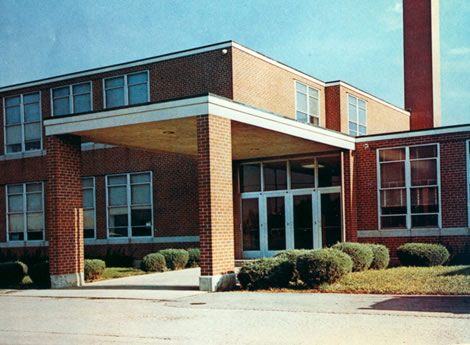
The student population continued to grow in the Hilliard area and the school board began construction on a new high school in 1956. This is the third high school built for upper grades in Hilliard. Two years later J.W. Reason Elementary opened and was named in honor of Dr. J.W. Reason who was a former board of education president and member for many years. He also was a doctor in the community. The former high school became a junior high school for seventh and eighth grade students. Ninth through twelfth grades were at the new high school.
In January 1959 a lot of rain fell on frozen ground that was covered by snow. This caused a lot of flooding in the area. The schools were closed for a short time while the area recovered from the flooded streets, homes, and businesses.
During this time the school district enrollment began to increase steadily. By 1957 the enrollment was 1,612 students. Housing developments were being built in Hilliard, which contributed to this rise in enrollment.
The school district had 21 bus drivers and 2 mechanics to keep the buses running.
The first woman was elected to the Scioto Darby Board of Education in 1957. Her name was Mrs. Grace Tharp. Hilliard Tharp Sixth Grade School is named after her because of her many years of service as a school board member.
The sixties brought a lot of increase in students to the school system. Avery, Beacon, and Ridgewood elementary schools were built and additions were added to Hilliard High School, Ridgewood Elementary, Hilliard Junior High, and Brown Elementary! In 1968 the Hilliard City Council officially declared the name of the city to be Hilliard and not Hilliards. During this year, the school system added kindergarten classes for the first time and Britton Junior High was built which is now Britton Elementary. A Commons building was added between Hilliard Elementary and Hilliard High School. This building had a cafeteria and auditorium that both schools used.
Hilliard’s population continued to grow and so did the student population. Scioto-Darby Local School District was changed to Scioto Darby City School district. Due to the change, the school district was no longer supervised by the County Superintendent and the County Board. The district had one high school, two junior high schools, and six elementary buildings.
In 1972 the student district enrollment was 4,983 pupils and by 1994 the student population was 8,662 students. In 1989 the school district was the 65th largest in the state and by 1993, the Hilliard School District was now the 15th largest school system in the state of Ohio! A year later, in 1994, with 8,662 students, Hilliard became the 10th largest school district in the state.
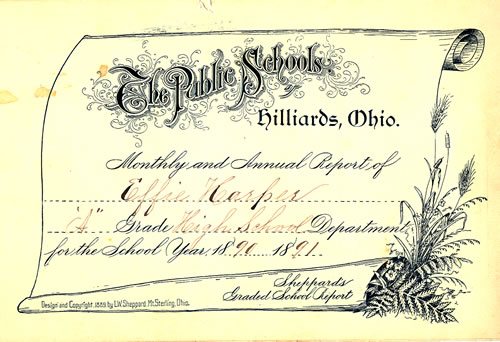
The first through fifth grades gave letter grades, A, B, C etc… and in the early 1970s the progress reports were changed to Satisfactory (S) and Unsatisfactory (U) to mark a student’s progress.
1973 was the last year for the Vocational Agriculture program. It had been a part of the high school curriculum for 53 years. It was discontinued because of the changing student needs. Hilliard did not have many farmers and the need for knowledge of horticulture dropped drastically. The building of the Central Ohio Joint Vocational School opened and met the needs of students who wanted a vocational education. This school is located in Madison County and several school districts send students there.
In 1975, Columbia Gas announced that there was an energy crisis. The school district was told that they needed to cut their usage by 40%. Thermostats were turned down to 65 degrees in the classrooms, hallways were set to 60 degrees or colder and the heat was off on the weekends. Students and staff wore extra clothing to stay warm. In 1977 the schools in the area were closed from February 4th through March 6th! Teachers provided “homebound” activities and suggestions to help the students learn during this month with no school. The Northwest News (the local paper) and the Columbus Dispatch provided pages of educational activities for students to read and complete. Educational programs were offered on television for students to watch on the local educational channel.
Summer school was offered in 1977. Students could take classes for enrichment, make up courses that they failed or take new credit so they could graduate early.
On January 12th, 1982, Scioto-Darby Local School District became the Hilliard City School District.
During the 1980s the junior high became a middle school, which housed only 7th and 8th graders. Britton Junior High became the Hilliard High School Freshman building (9th grade only). A new bus garage was built on Davidson Road where it is still located. By 1988 all but 4 of the district’s bus drivers were female. The district owned approximately 45 buses. This time also saw the beginning of the technology age with computers beginning to be purchased for students to use in the schools.
In 1987, the district planned a celebration of its 100 years of education! A Blue Ribbon Campaign was organized to get support to build a new high school. It passed in May. The new Hilliard High School would be built on the corner of Davidson and Avery road. It is now called Hilliard Davidson High School. Additions were also added to Avery, Ridgewood, and Britton. When the new Hilliard High opened in 1989, the former high school became Hilliard Middle School.
School-Age Childcare (SACC) was started in the Hilliard elementary schools during the late 1980s. Many students’ parents needed to be at work before school started and weren’t finished with work when school was over. This program offered the parents a place to safely leave their children before and after school. Adults were hired to care for the children. This program was popular.
Hilliard City Schools experienced a lot of growth in the 1990s. The district opened eight schools during this decade, four elementary schools (Hilliard Crossing, Norwich, Horizon, Darby Creek), Hilliard Station Sixth Grade, Weaver and Heritage Middle Schools, and Darby High School.
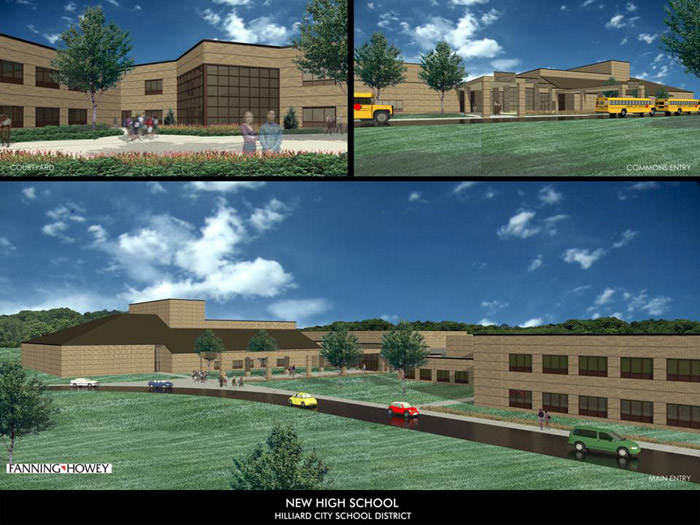
Student enrollment continues to climb in the Hilliard schools. The school district is the ninth largest school system in the state of Ohio. Four more schools were opened, three elementary buildings (Hoffman Trails, Alton Darby, and Washington), and Hilliard Tharp Sixth Grade. In 2009, Hilliard’s third high school will open near Brown Elementary on Walker Road. It will be called Hilliard Bradley. Hilliard Schools now has 14 elementary buildings, 2 sixth grade buildings, 3 middle schools, and 2 high schools with the third to open soon.
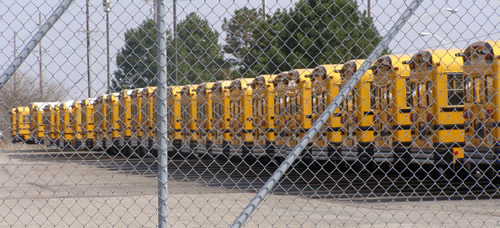
Busing is still provided for students who live in areas of Hilliard that need to be bused to school. The district does have many walkers too. The district owns 141 buses and employs 112 bus drivers! This is another area that has grown too! The bus garage is still located on Davidson Road next to Hilliard Davidson High School.
Hilliard City Schools supports technology in all of its buildings. All buildings have mobile laptop carts and/or computer labs for students to use. There are many opportunities for staff and students to integrate technology into the curriculum.
Letter grades (A, B, C, etc…) are given in grades six through twelve four times a year. The elementary classes are graded with a number system (4, 3, 2, 1) three times a year. This gives a better picture of a child’s learning.
There is a lot of land in the Hilliard City School district that still could be developed into homes, apartments, or condominiums. This could greatly effect the school population in the future. The school system could be building more schools and/or adding additions to buildings that already exist.
Gallery
Primary Sources
The Blue and White, A History of the Public Schools of Hilliard Ohio, 1814 to 1994, c. 1994
Articles adapted by Amy Wolf, Leslie Salamony, Linda Bryant, Joyce Temple and Anita Dignan
Overview Compiled and Edited by Bill Wheeler, Lauren Davis, Kathy Parker-Jones, Kay Bible and Meribeth Gillies
The Pioneer, Volume 1, Issue 1, c 2001
Adapted by C. Higginbotham
Photo: Northwest News, “Clarence Latham,” c1978